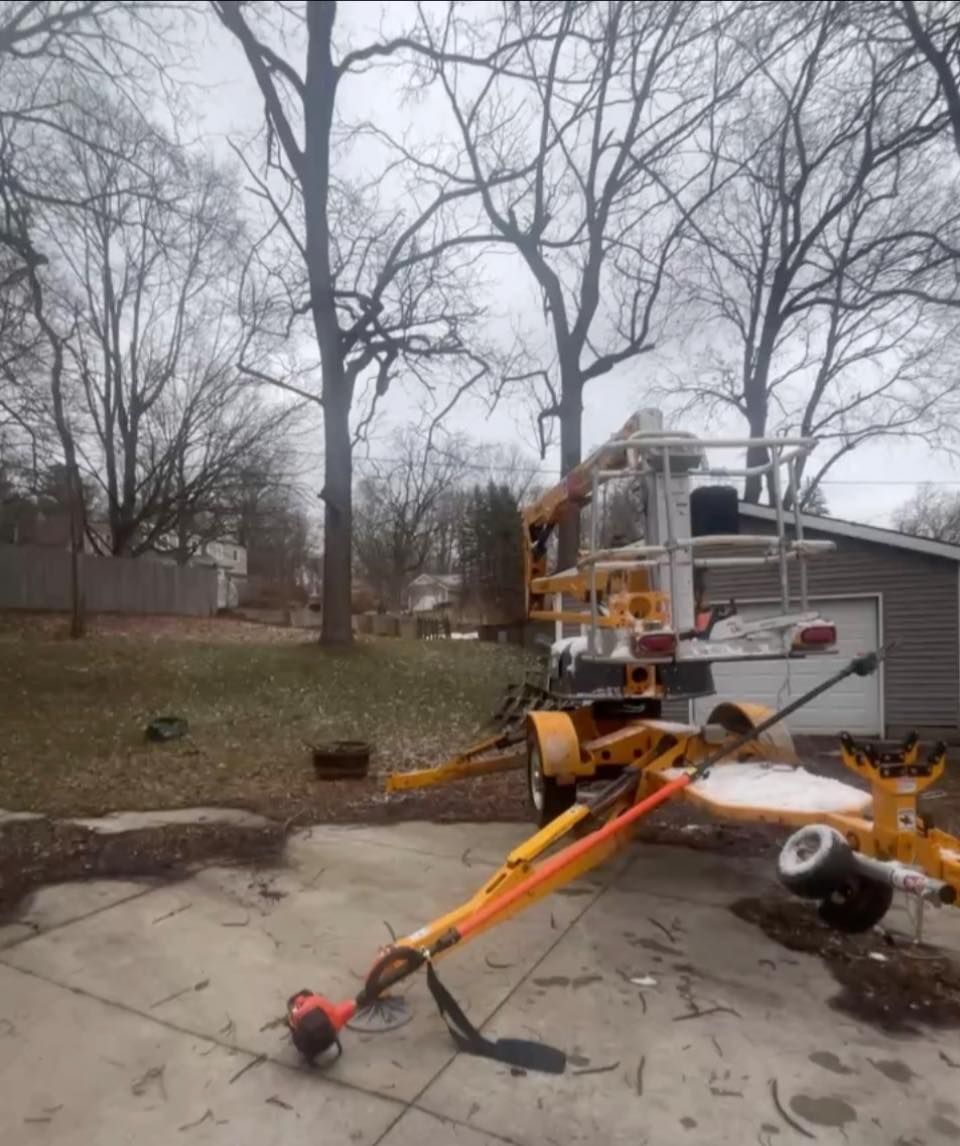
Trees Removed Without Damaging Surrounding Property
Tree Removal and Tree Trimming Services for Residential and Development Projects
Trees that are too close to structures, damaged by storms, or blocking construction plans require controlled removal to protect nearby buildings, utilities, and landscaping. Tsmitty's Outdoor Management LLC provides tree removal and trimming services across Coopersville, Allendale, and surrounding West Michigan areas for both residential properties and land development projects. Each job involves evaluating fall zones, sectioning larger trees when space is limited, and removing debris to leave the site clear and ready for its next use.
Tree removal is necessary when structural issues develop, roots are compromised, or trees interfere with planned construction. Trimming focuses on maintaining tree health by removing diseased or crossing branches, reducing canopy weight to limit storm damage, and controlling growth near roofs or power lines. All services include cleanup, with options for hauling debris, stump grinding, and preparing the area for landscaping or building work.
Request an on-site evaluation to assess tree conditions and determine the appropriate removal or trimming approach.
How Tree Work Is Completed Safely
Tree removal for residential properties requires different techniques than land clearing for development—residential work often involves rigging and sectional cutting when trees stand near homes, fences, or utility lines, while development projects may allow full-tree felling when adequate drop space exists. Trimming focuses on removing specific branches to improve structure and appearance without over-thinning, which can stress the tree and stimulate excessive new growth that requires more frequent future maintenance.
After removal, you'll notice cleared sightlines, eliminated hazards from leaning or damaged trees, and ground space ready for replanting, construction, or lawn establishment. Properties that undergo professional trimming show improved tree form, reduced deadwood that could fall during windstorms common in West Michigan, and healthier canopies that resist disease pressure better than neglected trees with dense, overlapping branches.
The service includes debris removal and site cleanup, but stump grinding is typically handled as a separate task since it requires specialized equipment and may not be necessary if the area will be filled or built over. For land clearing projects, multiple trees can be processed in sequence to prepare entire sections of property, coordinating with construction timelines so the site is ready when builders or landscapers arrive.
Tree work involves safety considerations and site-specific decisions that depend on tree size, location, and surrounding structures, so property owners typically want to understand how the process works and what to expect afterward.
Common Questions About This Service
What determines whether a tree should be removed or trimmed?
Removal is necessary when trees are dead, structurally compromised with major cracks or root failure, or located where they block development—trimming works for healthy trees that need shaping, deadwood removal, or canopy reduction to prevent future damage.
How is debris handled after tree removal?
All cut material is removed from the property, including branches, trunk sections, and smaller debris—larger logs can be left on-site if you want them for firewood, otherwise everything is hauled away and the area cleared.
Can tree removal be completed without damaging nearby landscaping?
Rigging techniques allow controlled lowering of branches and trunk sections in tight spaces, and drop zones are planned to avoid existing plantings, structures, and hardscaping—the goal is to remove the tree while leaving surrounding areas undisturbed.
When is the best time to trim trees in Coopersville, Allendale, and surrounding West Michigan areas?
Late winter or early spring before leaf-out allows better visibility of branch structure and reduces stress on the tree, though hazardous deadwood and storm-damaged branches should be removed immediately regardless of season.
What happens to the stump after a tree is removed?
Stumps are cut flush to the ground during removal, but grinding the stump below soil level requires separate equipment—grinding is necessary if you plan to replant, install lawn, or build over the area.
Tsmitty's Outdoor Management LLC completes tree services with attention to safety and site protection, ensuring surrounding property remains intact. Arrange a consultation to review which trees need attention and how the work will be sequenced.