
Lawns That Establish Without Sod Cost
Hydroseeding and New Lawn Installation for New Construction and Large Properties
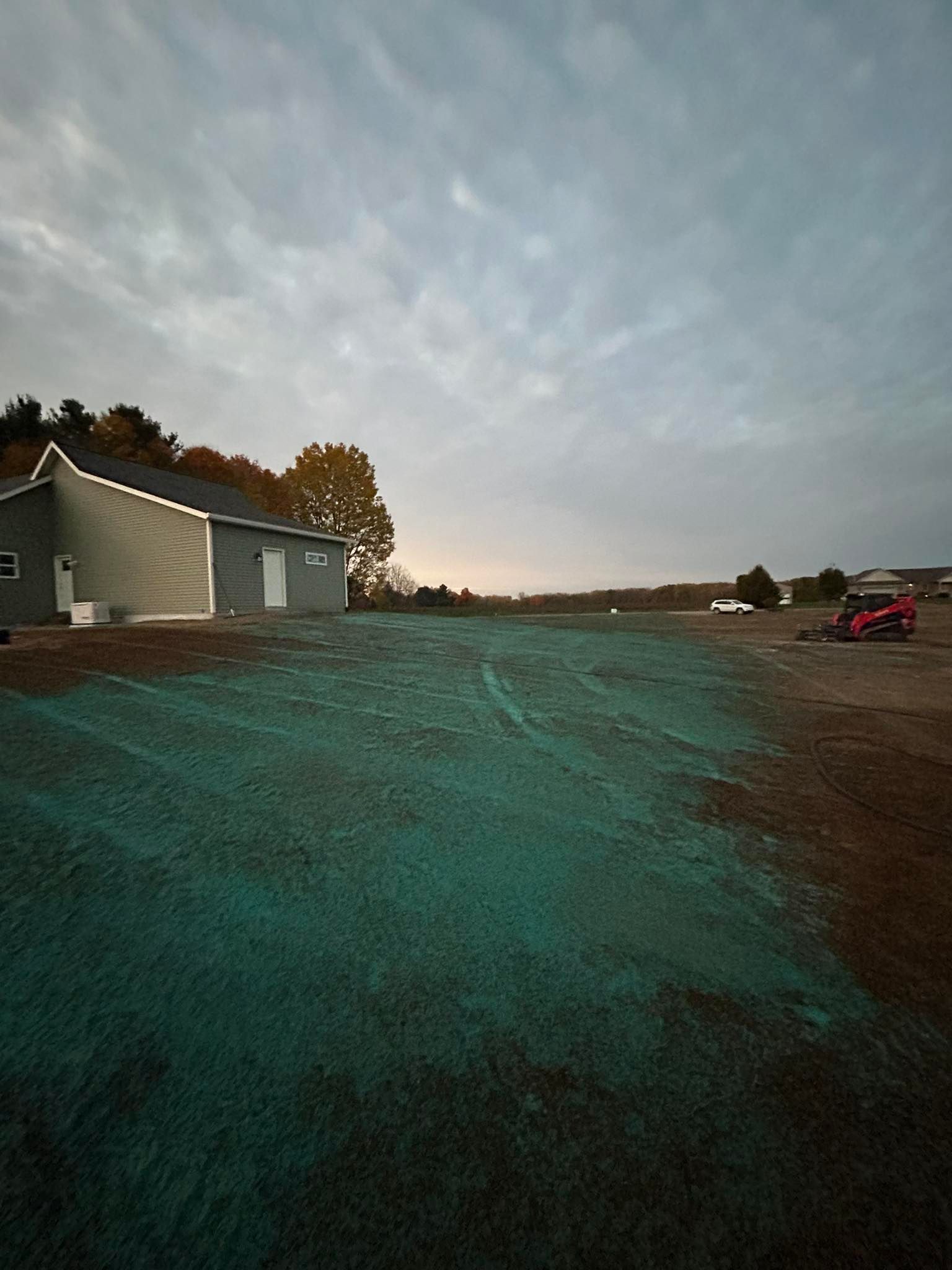
Bare soil around new construction homes erodes quickly during rain events and creates mud tracking issues until vegetation establishes. Tsmitty's Outdoor Management LLC provides hydroseeding services across Coopersville, Allendale, and surrounding West Michigan areas, using a custom in-house grass seed blend developed for local growing conditions. This process delivers even coverage across large areas at a fraction of sod installation cost. The slurry mixture includes seed, mulch fiber, tackifier to hold material in place on slopes, and starter fertilizer that supports germination during the first two weeks.
Ground preparation involves grading to eliminate low spots where water pools, removing construction debris, and loosening compacted topsoil so roots can establish properly. The hydroseeding application distributes seed uniformly at the correct rate per square foot, while mulch fiber helps retain moisture and regulate temperature around germinating seeds. On slopes or exposed areas, the tackifier binds the mixture to the soil and reduces washout during storms before roots take hold.
Request a detailed estimate based on your property size and soil preparation requirements.
What You Notice Once Grass Establishes
Germination typically begins within seven to ten days under proper moisture and temperature conditions, with visible green coverage appearing as seedlings emerge. The custom seed blend is selected for durability in West Michigan climates, including drought tolerance, disease resistance, and the ability to handle foot traffic once mature. Daily watering maintains surface moisture during early growth, followed by deeper, less frequent irrigation as the root system develops.
Lawns fill in with consistent turf coverage that helps prevent weed growth and controls erosion across the entire area. Rain events no longer create runoff channels or bare patches, and soil remains in place instead of washing toward foundations or driveways. The mulch layer naturally breaks down over time, adding organic matter to the soil without requiring removal.
Hydroseeding is well-suited for flat terrain and moderate slopes where erosion control is needed during establishment. While it doesn’t provide the instant results of sod, it offers a cost-effective solution for large residential properties, new construction sites, and areas where sod installation is impractical. First mowing should occur once grass reaches three to four inches, trimming only the top portion to avoid stressing new growth.
Homeowners planning new lawns typically ask about timing, maintenance during establishment, and how hydroseeding compares to other installation methods.
Answers to Frequent Service Questions
What time of year works best for hydroseeding in West Michigan?
Late spring and early fall provide ideal germination temperatures and natural rainfall patterns that reduce irrigation demands. Summer installations require more frequent watering due to heat and evaporation, while late fall seeding risks poor establishment before winter dormancy.
How long before the lawn can handle foot traffic after hydroseeding?
Light walking is possible once grass reaches mowing height and roots anchor plants firmly, typically four to six weeks after application. Heavy traffic or play activity should wait until the lawn has been mowed several times and the root system has developed enough to prevent tearing or compacting the soil.
Why use hydroseeding instead of spreading dry seed by hand?
The slurry application ensures even seed distribution without bare spots or clumped areas where hand spreading creates inconsistent coverage. Mulch fiber holds moisture around each seed and protects it from birds and wind displacement, improving germination rates compared to dry seed left exposed on the soil surface.
What ground preparation is required before hydroseeding can be applied?
Soil must be loosened to a depth that allows root penetration, with rocks and construction debris removed to prevent equipment damage and ensure smooth coverage. Grading eliminates drainage problems and creates a surface that holds the slurry mixture without runoff, particularly on sloped areas where tackifier becomes essential.
How does the custom grass seed blend differ from generic lawn seed?
The in-house blend combines species selected for local climate performance, including drought-tolerant varieties that survive West Michigan's variable summer rainfall and disease-resistant types that handle humidity without fungal issues. Generic blends often include species better suited to other regions, reducing overall lawn health and requiring more maintenance to sustain acceptable appearance.
Tsmitty's Outdoor Management LLC pairs hydroseeding with grading and erosion control planning to deliver lawns that establish successfully and perform long-term. Arrange an on-site consultation to review your property's soil conditions and lawn installation options.