Lawns Built on Proper Drainage and Soil
Lawn Grading, Preparation, and Topsoil Installation for New Lawns and Property Resets
New lawns often fail when installed over compacted soil, poor grading, or low-quality fill that lacks proper drainage and nutrients. Tsmitty's Outdoor Management LLC provides lawn grading and preparation services across Coopersville, Allendale, and surrounding West Michigan areas for new construction properties and lawn replacement projects. The process focuses on correcting drainage, creating smooth, usable surfaces, and installing quality topsoil that supports long-term turf growth. This service is commonly paired with hydroseeding to complete full lawn establishment in one project.
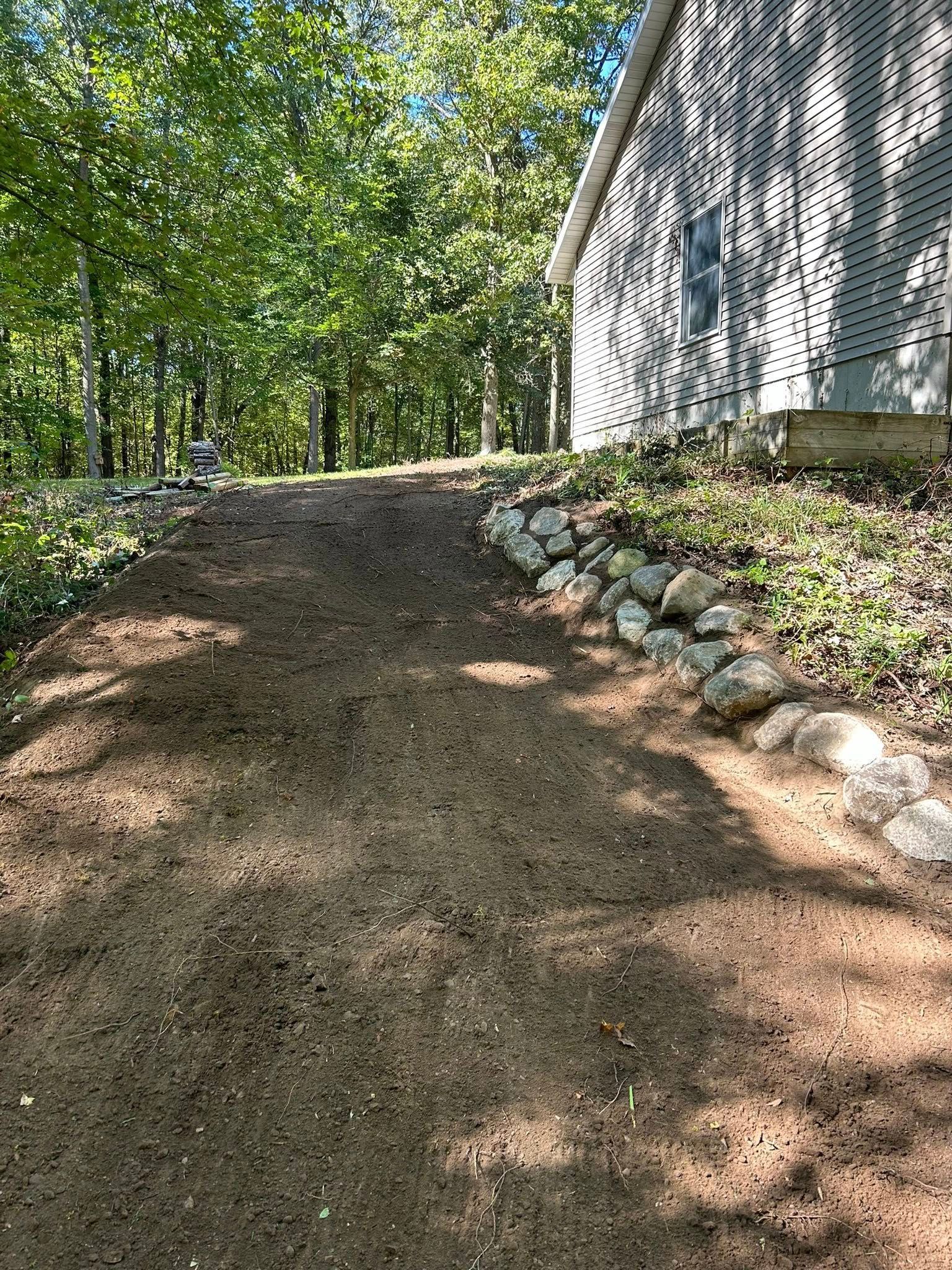
Grading reshapes the property to direct water away from foundations, eliminates low areas where water collects, and creates even surfaces that mow cleanly without scalping. Once grading is complete, topsoil is installed at a consistent depth to form a proper root zone. This layer is critical for moisture retention and drainage, especially during West Michigan’s wet spring conditions.
Request a site evaluation to assess drainage patterns and determine the appropriate grading and topsoil requirements for your property.
Built from the Ground Up in West Michigan
Proper preparation begins with rough grading to establish major slopes and drainage directions, then progresses to finish grading that smooths the surface and removes debris, stones, and clumps that would create uneven turf. Topsoil installation follows grading—material is spread evenly and lightly compacted to prevent excessive settling while maintaining enough porosity for root penetration and water infiltration. The topsoil layer typically ranges from four to six inches deep, providing sufficient rooting depth for common turf species while avoiding the cost and settling issues associated with excessive soil depth.
After preparation is complete, you'll notice a smooth, evenly sloped surface free of low spots and high points, consistent topsoil coverage that appears uniform in color and texture, and drainage patterns that move water away from structures toward appropriate discharge points. Properties prepared correctly support strong turf establishment with even germination, consistent growth rates across the entire lawn, and root systems that penetrate deeply enough to resist drought stress during summer dry periods.
This service focuses specifically on creating the foundation for a new lawn—it does not include seeding, sodding, or irrigation installation, though it's commonly combined with hydroseeding services to complete lawn establishment. The prepared surface must be protected from erosion until planting occurs, so timing often coordinates preparation and seeding within a short window to minimize soil disturbance from rain events. Properties with challenging drainage or significant grade changes may require additional work beyond basic preparation, including installation of drainage tile or adjustment of surrounding grades.
Lawn preparation involves decisions about topsoil depth, drainage correction, and project timing, and property owners often need clarity on how these factors affect both immediate costs and long-term lawn performance.
What Property Owners Usually Ask
What makes grading necessary before installing topsoil?
Grading establishes the correct slopes and contours that direct water away from structures and prevent pooling—topsoil installed over improper grades will follow those same flawed drainage patterns, resulting in wet spots and turf failure even with quality soil.
How much topsoil is needed for a healthy lawn?
Most residential lawns require four to six inches of topsoil to support adequate root development and moisture retention—less depth leads to shallow roots that struggle during dry periods, while excessive depth increases settling issues and project costs without improving turf performance.
Can topsoil installation correct existing drainage problems?
Topsoil alone doesn't fix drainage issues—grading must first establish proper slopes and low-point discharge routes, then topsoil is installed over those corrected contours to provide the growing medium for turf.
When should lawn preparation be completed relative to seeding?
Preparation should be completed just before seeding or sodding to minimize soil disturbance and erosion. In Coopersville, Allendale, and surrounding West Michigan areas, this typically means finishing grading and hydroseeding in sequence during spring or early fall when conditions support proper germination.
What happens if the ground settles after topsoil installation?
Some settling is normal as topsoil consolidates, but proper installation includes light compaction to minimize this—low spots that develop after settling can be topdressed with additional soil before or after seeding, though severe settling usually indicates insufficient compaction during preparation.
Tsmitty's Outdoor Management LLC prepares lawns with attention to drainage requirements and soil quality, creating surfaces that support lasting turf health. Contact to discuss your property's grading needs and coordinate preparation with your lawn establishment timeline.