
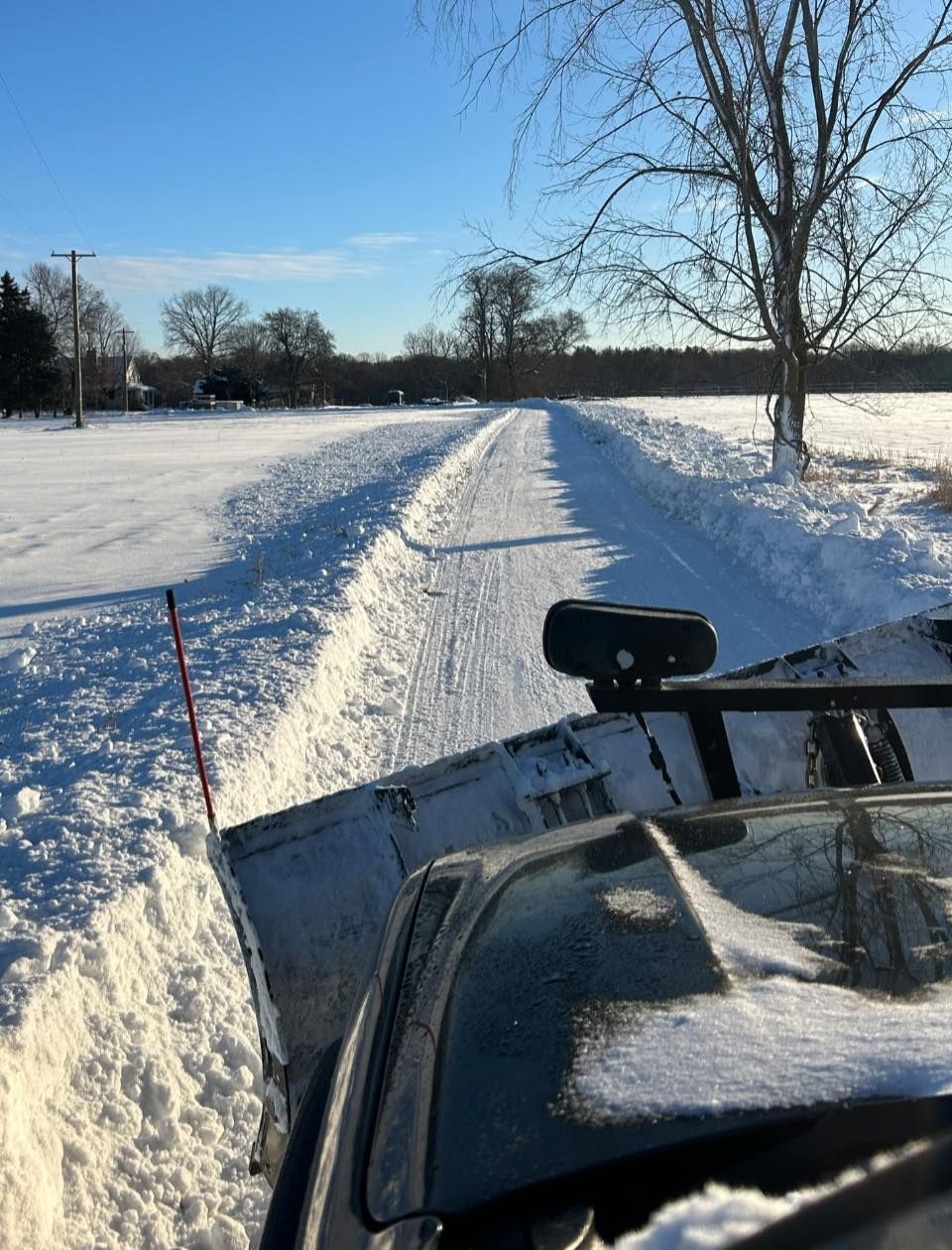
Driveways Cleared Before Morning Commute
Snow Plowing and Snow Removal for Residential and Commercial Properties
Six inches of snow overnight transforms driveways and parking lots into impassable surfaces that trap vehicles and create liability hazards for property owners. Snow accumulation across Coopersville, Allendale, and surrounding West Michigan areas often arrives with lake-effect intensity, dropping heavy snowfall in short windows that demand immediate clearing before compaction occurs. Tsmitty's Outdoor Management LLC provides plowing services timed to maintain access during active storms and after accumulation stops, using equipment sized appropriately for residential driveways and commercial lots.
Service timing depends on accumulation triggers agreed upon during seasonal contract setup or per-event scheduling, with response prioritized based on storm intensity and client access needs. Plowing removes snow down to pavement level without gouging surfaces, pushing material to designated areas where it won't block drainage or create visibility problems. For commercial properties, parking lot clearing includes stall access and walkway connections to building entrances. We also offer liquid de-icing applications and support zero-tolerance commercial properties that require continuous monitoring and treatment to prevent snow and ice accumulation.
Contact us to secure dependable snow removal before the season begins and response delays occur.
Why Consistent Service Prevents Buildup Problems
Plowing during active storms prevents snow from compacting into dense layers that resist removal and create ice formation as temperatures fluctuate. Each pass removes loose snow while it's still easy to move, maintaining pavement access without the equipment strain and surface risk associated with clearing compacted or frozen accumulation. Seasonal agreements establish service parameters in advance, eliminating the need to arrange plowing during storm events when provider availability becomes limited.
After service, your driveway or parking lot remains accessible without manual shoveling or vehicle risk from trapped wheels spinning on packed snow. Walkways stay clear enough for safe foot traffic, and snow is positioned away from building foundations where melt could create water intrusion problems. Regular clearing throughout the winter reduces total accumulation in storage areas, preventing the massive piles that block sightlines and take weeks to melt in spring.
Per-service scheduling offers flexibility for properties with lighter snowfall exposure or owners who prefer to arrange clearing only after significant accumulation. Response timing varies with demand during active storms, making seasonal agreements more reliable for properties where access cannot be delayed. Equipment selection matches property size, with smaller residential driveways requiring different approaches than expansive commercial lots where loader efficiency becomes important.
Property owners in Coopersville, Allendale, and surrounding West Michigan areas often ask about service triggers, equipment impact on surfaces, and how seasonal agreements differ from per-event pricing.
Common Questions About This Service
What snow depth triggers plowing service under seasonal agreements?
Trigger depths are set during contract setup based on property needs and typical storm patterns, commonly ranging from one to two inches. Lower triggers maintain easier access but increase total service visits, while higher triggers reduce frequency but may allow temporary accumulation that affects usability.
How does plowing equipment avoid damaging asphalt or concrete driveways?
Blade shoes are adjusted to ride slightly above the pavement surface, preventing direct scraping that gouges asphalt or chips concrete edges. Operators familiar with each property's surface condition and layout adjust approach angles and blade pressure to remove snow effectively without surface contact that causes damage.
Why does snow removal timing matter more during lake-effect events in West Michigan?
Lake-effect storms dump snow rapidly with little warning, creating accumulation that exceeds standard storm rates and quickly makes surfaces impassable. Plowing during active snowfall keeps pavement accessible and prevents the compaction that occurs when multiple inches accumulate before any clearing occurs.
What happens to snow after it's plowed from driveways and parking lots?
Snow is pushed to property edges or designated storage areas where it won't block drainage paths, cover landscape features, or obstruct visibility at intersections and driveway exits. Storage area selection considers spring melt patterns to avoid water pooling near foundations or flowing across sidewalks.
How do seasonal agreements compare to calling for service after each storm?
Seasonal agreements guarantee response based on predetermined triggers without requiring contact during storms, while per-service scheduling depends on availability when demand peaks during major snow events. Properties requiring reliable access typically benefit from seasonal arrangements that prioritize service regardless of storm timing or intensity.
Tsmitty's Outdoor Management LLC understands West Michigan winter response requirements and maintains equipment to handle both residential and commercial snow removal needs. Reach out to discuss seasonal service options or per-event scheduling that matches your property's winter access requirements.